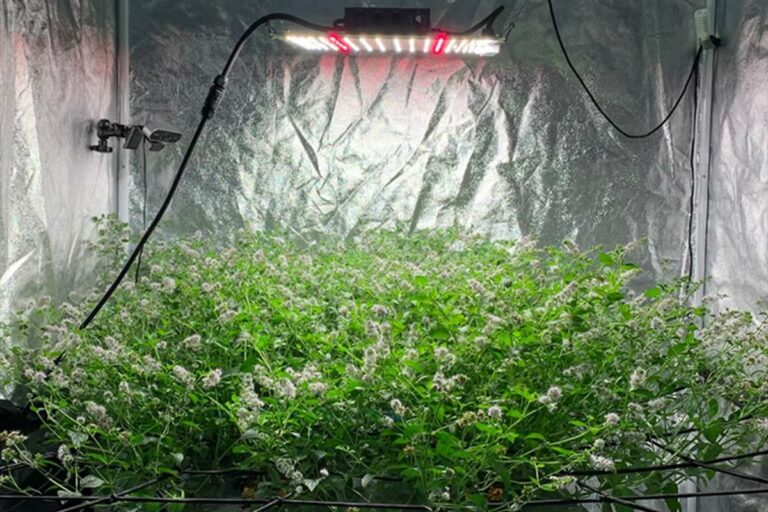
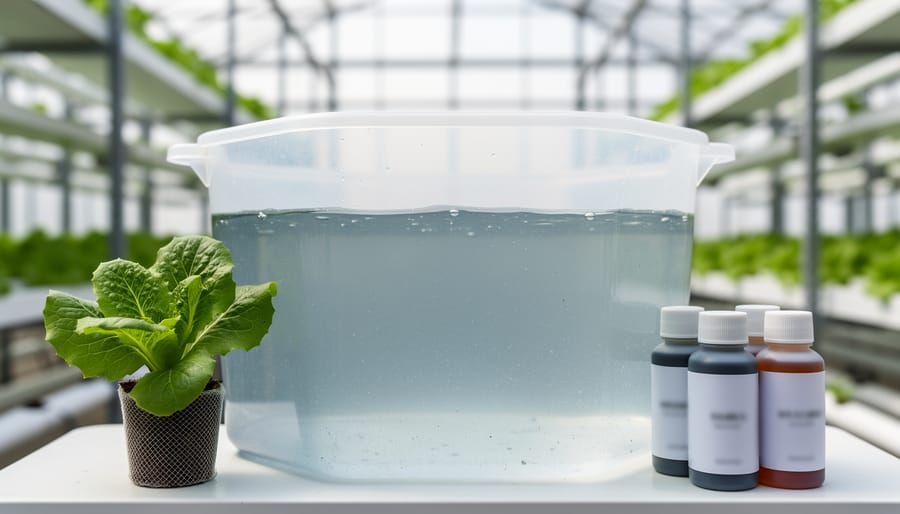
Organic nutrients for hydroponics combine water-soluble plant-based and mineral sources to feed crops without synthetic chemicals, delivering comparable yields to conventional hydroponic fertilizers while supporting sustainable growing practices. The right organic nutrient solution depends on your system type, crop selection, and whether you’re willing to manage the slightly higher maintenance these products require.
The challenge with organic hydroponics isn’t whether it works. It does. The challenge is understanding that “organic” in a hydroponic context means something different than soil-based organic gardening. Traditional organic matter like compost or manure won’t work in water-based systems. Instead, you’ll use nutrients derived from plant extracts, rock minerals, and naturally occurring compounds that have been processed into water-soluble forms your plants can absorb directly.
Many growers assume they must choose between high performance and organic principles. That’s not true anymore. Advances in organic nutrient formulations have closed the gap significantly since the early days of hydroponics. You’ll see differences in how you manage your system, monitoring dissolved solids more frequently and cleaning components more often, but the harvest quality and yield potential now rival synthetic alternatives.
This guide breaks down exactly what to look for when buying organic hydroponic nutrients, which product types suit different systems, and how to avoid the common mistakes that lead growers to wrongly conclude organic hydroponics doesn’t work.
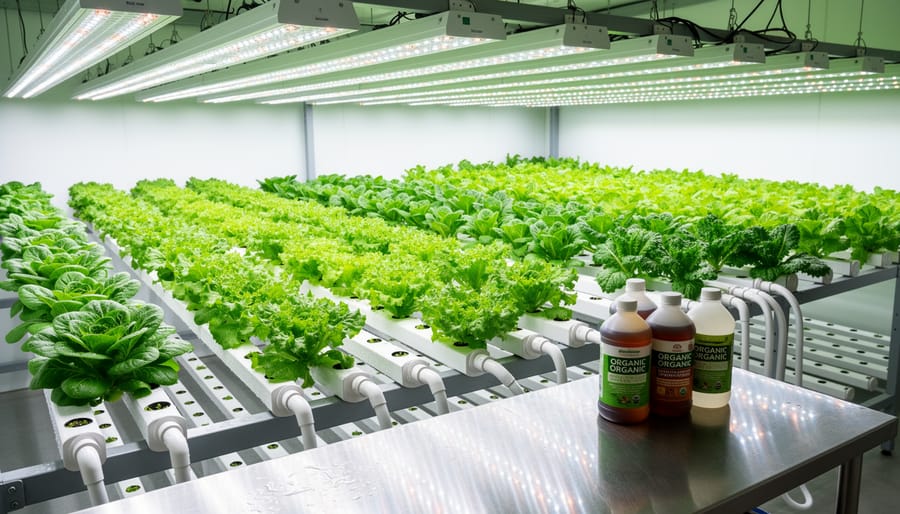
Understanding Organic Nutrients in Hydroponic Systems
What Makes Hydroponic Nutrients ‘Organic’?
Organic hydroponic nutrients are derived from natural, once-living sources rather than synthesized in a lab. Unlike synthetic nutrients that isolate specific mineral salts, organic options come from plant materials, animal byproducts, and mineral deposits that microorganisms must break down before plants can absorb them.
The gold standard for verification is OMRI certification, the Organic Materials Review Institute evaluates products against USDA National Organic Program standards. When you see the OMRI Listed seal, you know the product meets strict criteria for organic growing. Other certifications like CDFA Organic Input Material and European ECOCERT serve similar purposes in their regions, though standards vary slightly.
Common source materials include kelp meal, which provides trace minerals and growth hormones naturally present in seaweed. Fish emulsion and fish hydrolysate deliver nitrogen along with amino acids. Bat guano, worm castings, and composted plant matter supply balanced NPK ratios. Alfalfa meal contributes nitrogen and triacontanol, a natural growth stimulant. Rock phosphate and greensand offer phosphorus and potassium from ancient mineral deposits.
The challenge in hydroponics is that these organic sources contain complex molecules. In soil, beneficial bacteria and fungi break them down into plant-available forms. Hydroponic systems lack this soil biology, so truly organic nutrients undergo extensive processing to pre-digest these materials. Quality organic hydroponic products use enzymatic breakdown or microbial fermentation to create solutions that won’t clog systems while maintaining their organic integrity. This processing explains why certified organic hydroponic nutrients typically cost more than their synthetic counterparts.
Organic vs. Synthetic: Key Differences
Synthetic nutrients deliver immediate results because plants absorb them directly, they’re already in mineral form. Organic nutrients need microbial breakdown first, which slows nutrient availability by days or even weeks. This delay matters less in soil, but in sterile hydroponic systems with minimal beneficial bacteria, organic formulas require extra attention to maintain consistent feeding.
pH stability differs significantly between the two. Synthetic nutrients typically hold pH steady once mixed, while organic formulas can drift as compounds break down. Research on organic fertilizer pH fluctuations shows this variability requires more frequent monitoring. You’ll check and adjust pH more often with organics, especially in recirculating systems where biological activity compounds the effect.
| Factor | Organic Nutrients | Synthetic Nutrients |
|---|---|---|
| Absorption Speed | Slow (microbial breakdown needed) | Immediate (plant-ready minerals) |
| pH Stability | Drifts as compounds break down | Generally stable once mixed |
| System Residue | Higher (organic particles accumulate) | Minimal (fully soluble) |
| Environmental Impact | Lower carbon footprint | Energy-intensive production |
Residue poses the biggest practical challenge. Organic nutrients leave behind particles, bits of kelp, fish proteins, humic acids, that can clog drip emitters, coat roots, and cloud reservoirs. Synthetic solutions dissolve completely, leaving systems cleaner. If you run organics, plan for weekly reservoir cleanings and choose systems with larger tubing. The trade-off? Organic residues feed beneficial microbes and build a more resilient growing environment over time.
Key Buying Factors for Organic Hydroponic Nutrients
System Compatibility
Not all organic nutrients play nicely with every hydroponic setup. The physical properties of organic formulas, often thicker and containing suspended particles from natural sources, can create headaches in systems with narrow tubing or fine spray nozzles.
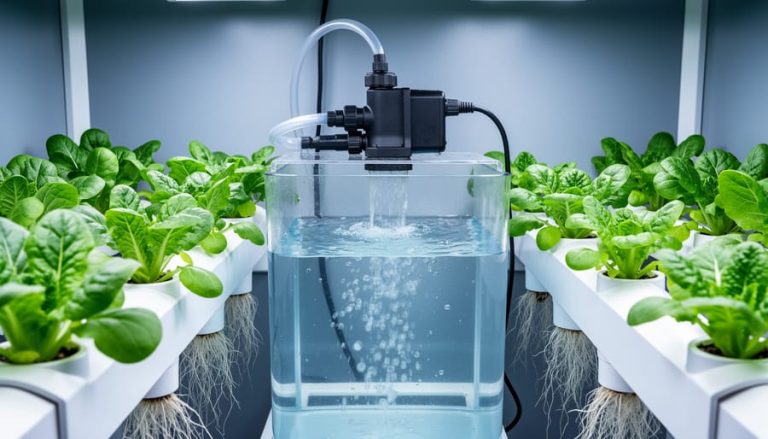
Deep water culture (DWC) systems generally handle organic nutrients well since there’s no filtration to clog, though you’ll want to clean air stones more frequently as organic residue builds up. Ebb and flow setups work fine with properly dissolved organic solutions, but watch for sediment accumulation in the reservoir.
Here’s where things get tricky: nutrient film technique (NFT) and aeroponic systems demand crystal-clear solutions. Their narrow channels and precision misters can clog quickly with organic particles, leading to uneven feeding or complete blockages. If you’re running these systems, look for highly refined organic nutrients specifically labeled as “hydroponic grade” or consider synthetic alternatives.
Drip systems fall somewhere in between. Larger drip emitters handle most organic formulas without issue, but check the particle size specifications. Adding an inline filter helps, though you’ll need to clean it regularly. The key is matching your nutrient’s viscosity and particle content to your system’s tolerance for debris.
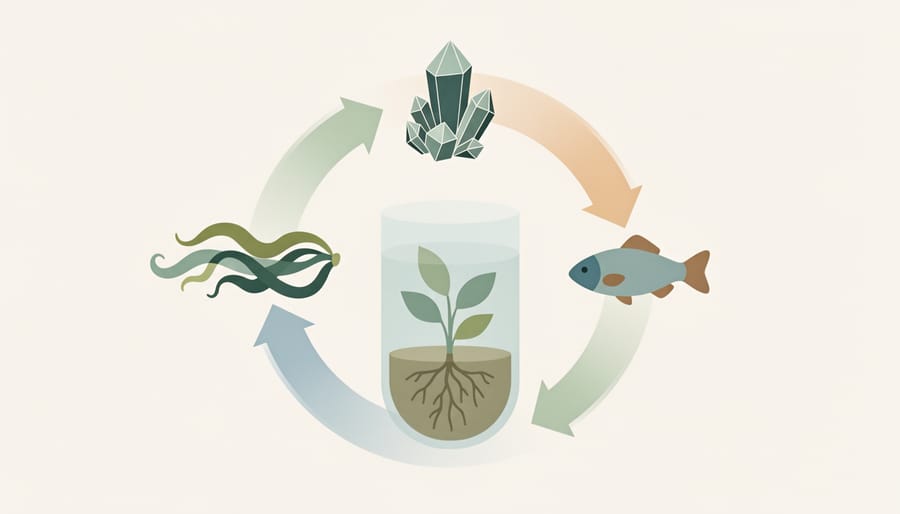
NPK Ratios and Micronutrient Balance
Understanding nutrient labels is your first step toward choosing the right organic formula. The three numbers on every bottle, NPK, represent nitrogen (N), phosphorus (P), and potassium (K) as percentages by weight. A 3-1-2 ratio means 3% nitrogen, 1% phosphorus, and 2% potassium.
Leafy greens thrive with higher nitrogen ratios like 5-2-3, supporting vigorous leaf production throughout their growth cycle. Fruiting plants need different support: start seedlings with balanced ratios around 3-3-3, shift to higher nitrogen (5-3-4) during vegetative growth, then switch to bloom formulas with reduced nitrogen and increased phosphorus (2-5-4) when flowering begins.
Micronutrients matter just as much as NPK, though they’re needed in smaller amounts. Your organic formula should list calcium, magnesium, iron, manganese, zinc, copper, boron, and molybdenum. Many growers encounter deficiencies with organic nutrients because some formulas skimp on these elements. Calcium and magnesium deficiencies appear most frequently, look for products that explicitly guarantee complete micronutrient profiles or plan to supplement separately.
Check whether micronutrients come in chelated forms, which remain available to plants across wider pH ranges. EDTA-chelated iron, for example, prevents the lockout issues common when organic nutrients shift your system’s pH. Products labeled “complete” or “full spectrum” typically include all essential micronutrients, eliminating guesswork for beginners.
Concentration and Dilution Requirements
Organic hydroponic nutrients come in both liquid and powder concentrates, each requiring dilution before use. Most liquid formulas range from 2-1-6 to 8-16-24 concentrate ratios, meaning you’ll mix 5-15 milliliters per gallon of water. Powder concentrates typically offer higher ratios, sometimes 20-20-20 or stronger, requiring just 1-2 grams per gallon.
To calculate true cost-per-use, divide the product price by the number of gallons it makes at recommended strength. A $30 liquid concentrate yielding 200 gallons costs $0.15 per gallon, while a $25 powder making 300 gallons runs just $0.08 per gallon. Powders generally deliver better value but require accurate measuring scales.
Check dilution instructions carefully. Some organic products recommend different rates for vegetative versus flowering stages, or varying strengths based on plant maturity. Start at 50-75% of the manufacturer’s suggested concentration when first introducing any organic nutrient, then increase based on plant response and EC readings. Concentrated formulas also mean less storage space and reduced shipping costs, making them practical for urban growing setups where space matters.
Types of Organic Hydroponic Nutrients Compared
Single-Part vs. Multi-Part Nutrient Systems
Single-part nutrient systems combine all essential elements into one bottle, making them the simplest choice for growers who want a straightforward feeding routine. You mix the same formula throughout your plant’s entire lifecycle, adjusting only the concentration. This approach works well for leafy greens, herbs, and growers prioritizing convenience over maximum yields. The trade-off is less control, you can’t tailor nutrition to specific growth phases, which matters more for fruiting crops like tomatoes or peppers that have distinct vegetative and flowering needs.
Multi-part systems typically split into separate grow and bloom formulas, sometimes adding a third micronutrient component. During vegetative growth, you use higher nitrogen ratios; when plants start flowering, you switch to bloom formulas with elevated phosphorus and potassium. This customization lets you optimize nutrition for each stage, potentially improving fruit quality and harvest size. Advanced growers appreciate the flexibility to adjust individual elements based on plant response.
The learning curve differs significantly. Single-part systems reduce mixing errors and simplify record-keeping, perfect for beginners or those managing multiple small systems. Multi-part formulas require tracking which bottles to use when, but they’re not complicated once you establish a routine. For urban vertical farms running various crops simultaneously, single-part solutions often make more practical sense than juggling different feeding schedules.
Liquid vs. Powder Organic Nutrients
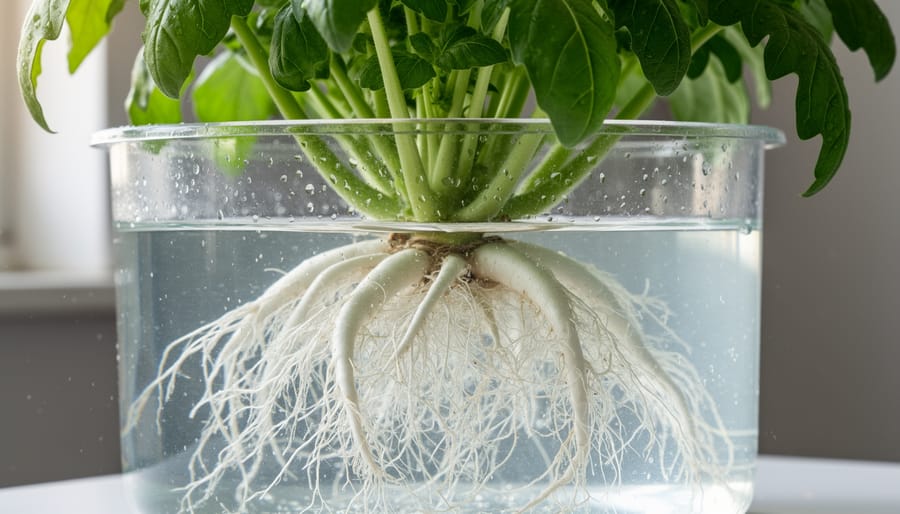
Liquid and powder organic nutrients each offer distinct practical advantages depending on your setup and priorities. Liquid formulas provide immediate convenience, you pour, measure, and mix without waiting for particles to dissolve. They’re ideal for automated dosing systems and for growers who prefer quick preparation. However, liquids typically have shorter shelf lives once opened (6-12 months) and weigh more for shipping, which increases cost.
Powder concentrates solve the storage problem. They remain stable for years in sealed containers and take up minimal space, making them perfect for small urban growing areas. A single bag often lasts months longer than an equivalent liquid volume. The trade-off? You’ll spend extra time ensuring complete dissolution before adding to your reservoir, and some powders settle quickly during mixing.
Cost efficiency usually favors powders. You’re not paying to ship water weight, and concentrated formulas mean you’ll buy nutrients less frequently. For growers running multiple systems or larger setups, powders can cut nutrient expenses by 30-40% annually. Beginners often start with liquids for simplicity, then transition to powders as they scale up.
Specialized Formulations
Specialized organic formulations let you fine-tune nutrition for each stage of plant development rather than relying on a single all-purpose mix. These targeted products address the shifting nutrient demands plants face as they mature, helping you maximize yields without resorting to synthetic boosters.
Vegetative-stage formulas emphasize higher nitrogen ratios, often 3-1-2 or 4-1-3, to fuel rapid leaf and stem growth. Look for organic sources like alfalfa meal, bat guano, or soybean extracts that release nitrogen gradually. These work best for leafy greens, herbs, and young transplants that need robust foliage before flowering.
Bloom or fruiting formulations flip the ratio, prioritizing phosphorus and potassium (1-3-2 or 2-3-4 ranges) to support flower development, fruit set, and flavor. Organic bloom boosters often include kelp, bone meal, or rock phosphate. They’re essential for tomatoes, peppers, strawberries, and cannabis, where flower and fruit quality directly impact harvest success.
| Formulation Type | Growth Stage | Key Ingredients | Ideal Plants |
|---|---|---|---|
| Vegetative Formula | Seedling to pre-flower | Alfalfa, fish emulsion, soybean | Lettuce, basil, kale, young transplants |
| Bloom Booster | Flowering and fruiting | Kelp, bone meal, rock phosphate | Tomatoes, peppers, strawberries, cannabis |
| Seedling Starter | Germination to first true leaves | Diluted fish, worm castings, trace minerals | All seedlings and clones |
| Cal-Mag Supplement | Throughout growth, as needed | Dolomite lime, kelp, oyster shell | Tomatoes, peppers, fast-growing greens |
Seedling starters use gentler concentrations, quarter to half strength, with trace minerals and humic acids to establish healthy root systems without burning tender tissues. These often come as diluted fish or worm casting extracts that won’t overwhelm young plants.
Calcium-magnesium supplements deserve special mention because many organic base nutrients lack adequate levels, especially for calcium-hungry crops. Organic cal-mag products typically derive from dolomite lime, kelp, or oyster shell flour. Use them preventively with tomatoes and peppers to avoid blossom end rot, or reactively when you spot interveinal chlorosis on new leaves.
Top Organic Nutrient Recommendations for Different Needs
Best Options for Beginners
For your first hydroponic setup, choose a single-part organic nutrient solution with a complete NPK profile and chelated micronutrients. These all-in-one formulas eliminate the guesswork of mixing multiple bottles and reduce the risk of nutrient imbalances that frustrate beginners.
Look for products labeled specifically for hydroponics rather than soil-based organic fertilizers. Hydroponic formulations dissolve cleanly and won’t clog pumps or emitters in systems like DWC or drip setups. Liquid concentrates work best for newcomers since they mix faster and more consistently than powders, though they cost slightly more per gallon of prepared solution.
Start with a mid-range concentration product that lists clear dilution ratios on the label. A 1:100 or 1:250 concentrate gives you room to adjust feeding strength as you learn to read your plants without wasting product. Avoid highly concentrated formulas that require precise measuring until you’ve grown through at least one full crop cycle.
Choose products with visible OMRI certification or similar organic verification. This ensures the formula meets recognized standards and won’t introduce synthetic additives that contradict your organic goals while you’re still learning the fundamentals.
Best for Advanced Vertical Systems
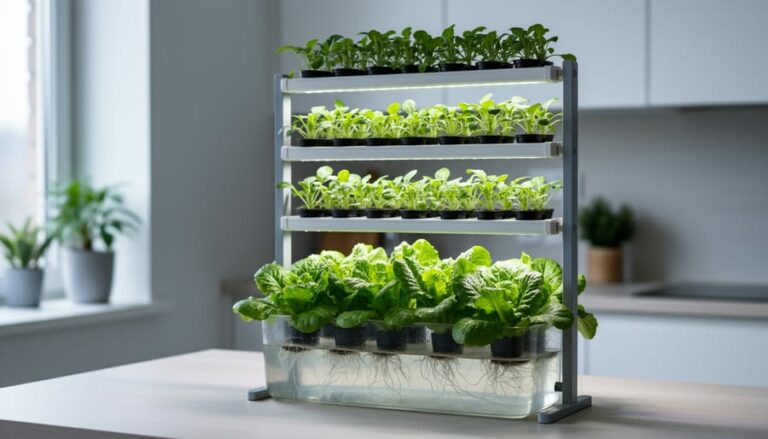
Advanced vertical farming setups demand organic nutrients engineered for precision and system stability. In recirculating environments where the same nutrient solution passes through multiple plant tiers, residue accumulation becomes a critical concern, look for ultra-filtered organic formulas specifically labeled for hydroponic recirculation. These products undergo mechanical filtration to remove particulates that could clog emitters or foul sensors in automated systems.
pH stability matters enormously when AI controllers manage feeding schedules. The best organic options for vertical systems incorporate natural chelators and pH buffers that resist dramatic swings during recirculation cycles. Kelp-based formulations with humic acids often outperform simpler fish emulsions in this regard, maintaining tighter pH ranges between 5.8 and 6.2 without constant manual adjustment.
Concentration levels should align with your dosing equipment’s capabilities. Many vertical growers prefer highly concentrated liquid organics that allow precise injection rates through automated dosers, reducing storage space while ensuring consistent delivery across multiple growing zones. Check that your chosen product integrates with EC monitoring systems, some organic compounds interfere with conductivity readings, complicating nutrient management in tech-driven operations.
Best Budget-Friendly Organic Options
Look for concentrated liquid formulas when shopping on a budget, they require smaller doses per gallon, stretching your investment across more feeding cycles. A 32-ounce bottle of quality organic concentrate typically costs $20-30 and lasts 3-4 months for a small system, compared to ready-to-use formulas that need frequent replacement.
Powder-based organic nutrients offer exceptional value. Though they require more mixing effort, a one-pound bag often costs less than equivalent liquid products while lasting twice as long. Store them in airtight containers away from moisture to maintain potency.
Single-part complete formulas save money by eliminating the need for separate vegetative and bloom bottles. While less customizable, they work well for most leafy greens and herbs, covering your needs with one product purchase.
Consider kelp meal and worm castings as budget supplements. Mixed into your reservoir weekly at low concentrations, these natural amendments boost micronutrient profiles without expensive specialized products. Start with quarter-strength ratios and observe plant response before increasing.
Skip expensive bloom boosters initially. A quality base formula provides adequate nutrition for most crops. Add specialized products only after mastering fundamentals and identifying specific deficiencies in your system.
Common Mistakes to Avoid When Buying Organic Hydroponic Nutrients
Overlooking System Compatibility
Not all organic nutrients suit every hydroponic system. The biggest culprit? Particle size. Fish emulsions and kelp-based formulas often contain fine organic matter that clogs drip emitters, aeroponics misters, and narrow tubing in NFT channels. What flows smoothly in a wide-tube ebb and flow system can wreak havoc in a precision dripper setup.
Residue buildup matters just as much. Organic nutrients break down over time, leaving biofilm and sediment that coat pump impellers, block filters, and reduce oxygen levels in reservoirs. Recirculating systems magnify this problem, what starts as slight cloudiness becomes thick sludge within days if the formula isn’t designed for continuous flow.
Before buying, check the product label for system compatibility warnings. Look for terms like “low-residue,” “clarified,” or “filtered for drip systems.” If you run aeroponics or micro-drip lines, stick with highly refined liquid organics or consider hybrid products that blend organic sources with chelated minerals for cleaner delivery.
Ignoring Certification and Quality Standards
The term “organic” lacks strict regulation in hydroponics, creating opportunities for misleading marketing. Products labeled “natural” or “organic-based” may contain synthetic additives or fillers that disqualify them from certified organic growing standards.
Look for OMRI (Organic Materials Review Institute) certification on product labels. OMRI-listed nutrients meet USDA organic program standards and undergo rigorous third-party verification. Other recognized certifications include CDFA (California Department of Food and Agriculture) and ECOCERT, depending on your region.
Uncertified products might perform adequately, but they won’t satisfy organic certification requirements if you plan to sell produce or maintain strict organic practices. Some manufacturers claim proprietary “organic blends” without transparency about ingredients or sourcing.
Check the guaranteed analysis panel for specific ingredient sources. Legitimate organic nutrients list recognizable components like kelp extract, fish hydrolysate, or rock phosphate rather than vague terms like “organic matter” or “plant nutrients.” When certification isn’t displayed prominently, request documentation directly from manufacturers before purchasing.
Misjudging Quantity and Concentration
Many growers get lured by low sticker prices without checking concentration levels. A $15 bottle that requires 5ml per gallon costs significantly less per feeding than a $10 product needing 30ml per gallon. Read the feeding chart before buying, calculate how many feedings you’ll actually get. Concentrated organic formulas often deliver better value despite higher upfront costs. Similarly, don’t stockpile nutrients beyond what you’ll use in 6-12 months. Organic formulas have shorter shelf lives than synthetics, and expired nutrients lose potency or develop microbial growth that can harm your system.
Neglecting pH and EC Management
Organic nutrients affect pH and electrical conductivity (EC) differently than synthetic formulas, yet many growers skip regular monitoring. Organic solutions often lower pH more dramatically and contain particulates that skew EC readings. Without a reliable pH meter and EC/TDS tester, you’re flying blind, risking nutrient lockout even when concentration seems right. Check levels before adding nutrients to your reservoir and again after mixing. Budget at least $30-50 for basic digital meters, or invest in continuous monitoring systems if you’re running recirculating setups. Ignoring water chemistry turns premium organic nutrients into expensive plant stress.
How to Use Organic Nutrients Effectively in Your Hydroponic System
Mixing and Application Best Practices
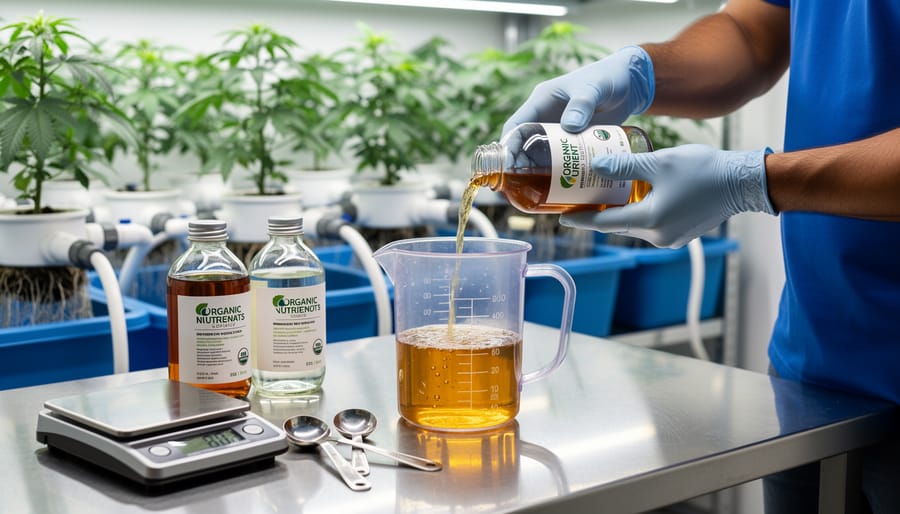
Start by preparing your mixing water at the right temperature, between 65°F and 75°F works best for organic nutrients. Cold water slows dissolution and can shock plant roots, while hot water may degrade sensitive organic compounds. Always add nutrients to water, never the reverse, to prevent concentration spikes that can harm beneficial microbes.
Mix organic formulas gently but thoroughly. Unlike synthetics, organic nutrients contain suspended particles that settle quickly. Stir for at least two minutes, then let the solution sit for 15-20 minutes before adding it to your system. This allows organic compounds to fully disperse and pH to stabilize.
Feed according to your plants’ growth stage rather than a rigid calendar. Seedlings need quarter-strength solutions, vegetative plants thrive on half to full strength, and flowering plants often require slightly reduced nitrogen with increased phosphorus. Check your reservoir every two to three days, organic solutions can shift pH more dramatically than synthetics as microbes break down compounds.
Change reservoir water weekly in recirculating systems to prevent buildup of organic residues that cloud water and clog pumps.
Monitoring Plant Response and Adjusting
Once you start feeding organic nutrients, your plants will tell you whether they’re happy, you just need to know what to look for. Check leaf color daily: vibrant green means you’re on track, while pale yellow suggests nitrogen deficiency and dark green with burnt tips indicates overfeeding. New growth should appear consistently, and stems should stay firm.
Use an EC or TDS meter to measure nutrient strength in your reservoir every few days. Organic formulas can drift as microbes break down compounds, so tracking changes helps you catch problems early. Most leafy greens thrive between 1.2-1.8 EC, while fruiting plants need 2.0-2.5 EC. If readings climb unexpectedly, plants aren’t absorbing nutrients efficiently, check pH, water temperature, and root health.
AI-driven monitoring systems take guesswork out of adjustments by tracking multiple variables simultaneously. These tools log EC, pH, temperature, and even analyze leaf photos to detect deficiencies before symptoms become severe. Start with baseline measurements, then adjust nutrient concentration in small increments (10-15% changes) based on what your monitoring data and plant observations reveal together.
Preventing and Solving Common Issues
Nutrient lockout often stems from pH drift in organic systems. Test your reservoir daily and adjust to maintain 5.5-6.5 pH. If lockout occurs, flush with pH-balanced water and restart at half strength.
System clogging happens when organic particles accumulate in lines and emitters. Use 200-mesh inline filters and clean your system weekly. Pre-dissolve powders completely and strain liquid nutrients before adding them to your reservoir.
Odor from organic nutrients signals bacterial growth. Change your reservoir every 7-10 days, keep water temperatures below 72°F, and ensure adequate aeration. Adding beneficial bacteria can outcompete odor-causing microbes while improving nutrient availability.
Frequently Asked Questions
Are organic nutrients really necessary for hydroponics?
They’re not required, but organic nutrients let you grow hydroponically while maintaining organic standards and supporting beneficial microbial activity. If certification or natural inputs matter to your growing goals, they’re worth it.
Can I just use soil organic fertilizers in my hydroponic system?
No, soil fertilizers typically contain particles that clog pumps and emitters, plus they’re not formulated for direct root contact in water. Only use products specifically labeled for hydroponic or soilless use.
How long do organic nutrients last once mixed?
Mixed organic solutions degrade faster than synthetic ones, usually 3-7 days in a reservoir depending on temperature and aeration. Mix smaller batches more frequently to maintain nutrient quality and prevent microbial overgrowth.
Do organic nutrients work in DWC systems?
They can, but require extra attention. Choose low-residue formulas, maintain strong aeration, clean roots regularly, and monitor water quality closely since organic matter can promote unwanted bacterial growth in stagnant areas.
Are organic nutrients more expensive than synthetic?
Initial cost per bottle is often higher, but concentrate formulas can be cost-competitive when you account for dilution rates. Budget 20-40% more overall, though savings come from healthier plants and fewer corrective inputs.
Can I switch from synthetic to organic nutrients mid-grow?
Yes, but flush your system thoroughly first and transition gradually over 1-2 weeks by mixing ratios. Plants adapt to organic feeding patterns differently, so watch for temporary nutrient uptake changes during the switch.
Do organic nutrients actually improve taste?
Many growers report more complex flavors, likely from the diverse micronutrient profiles and secondary metabolites organic sources provide. Results vary by crop, herbs and fruiting plants often show the most noticeable difference.
How should I store organic nutrients?
Keep bottles sealed in a cool, dark place away from temperature extremes. Liquid organics have shorter shelf lives than synthetic (12-18 months typical), and powders last longer if kept completely dry and airtight.
Beyond these common questions, remember that your specific setup influences which organic nutrients work best. A vertical NFT system running AI-monitored feeds has different requirements than a simple Kratky jar on a windowsill. Don’t hesitate to start with beginner-friendly complete formulas while you learn how your plants respond, then experiment with specialized products as you gain confidence reading plant signals and managing water chemistry.
Choosing the right organic nutrients for your hydroponic system doesn’t have to be overwhelming. Focus on three core considerations: match the nutrient type to your specific system (liquid concentrates for recirculating setups, low-residue formulas for NFT or aeroponics), verify organic certification through OMRI or equivalent standards, and select NPK ratios appropriate for your plants and their growth stage. Understanding these fundamentals prevents costly mistakes and sets you up for long-term success.
Start with a quality single-part organic formula if you’re new to hydroponics. As you gain confidence monitoring EC levels and reading plant signals, you can explore specialized products that fine-tune your results. The organic approach might require more attention to water chemistry than synthetic alternatives, but the payoff is nutrient-dense food grown without chemical residues, perfect for urban environments where every harvest matters.
Your choice of organic nutrients directly supports sustainable food production in your community. Every tomato, lettuce head, or herb cluster you grow hydroponically reduces transportation emissions, eliminates pesticide exposure, and proves that fresh, healthy food can come from any space with creativity and commitment. Whether you’re feeding your family, teaching students, or supplying a local market, organic hydroponics puts you in control of both quality and environmental impact.
Begin with what fits your budget and system today. Observe, adjust, and keep learning. You’re part of a growing movement making cities greener, one harvest at a time.